

What Is an ERP System?
As a business grows, so does the complexity behind the scenes. Processes that once worked through spreadsheets, emails, and separate software tools can become difficult to manage. Information gets duplicated, teams work from different data, and employees spend valuable time moving information
between systems.
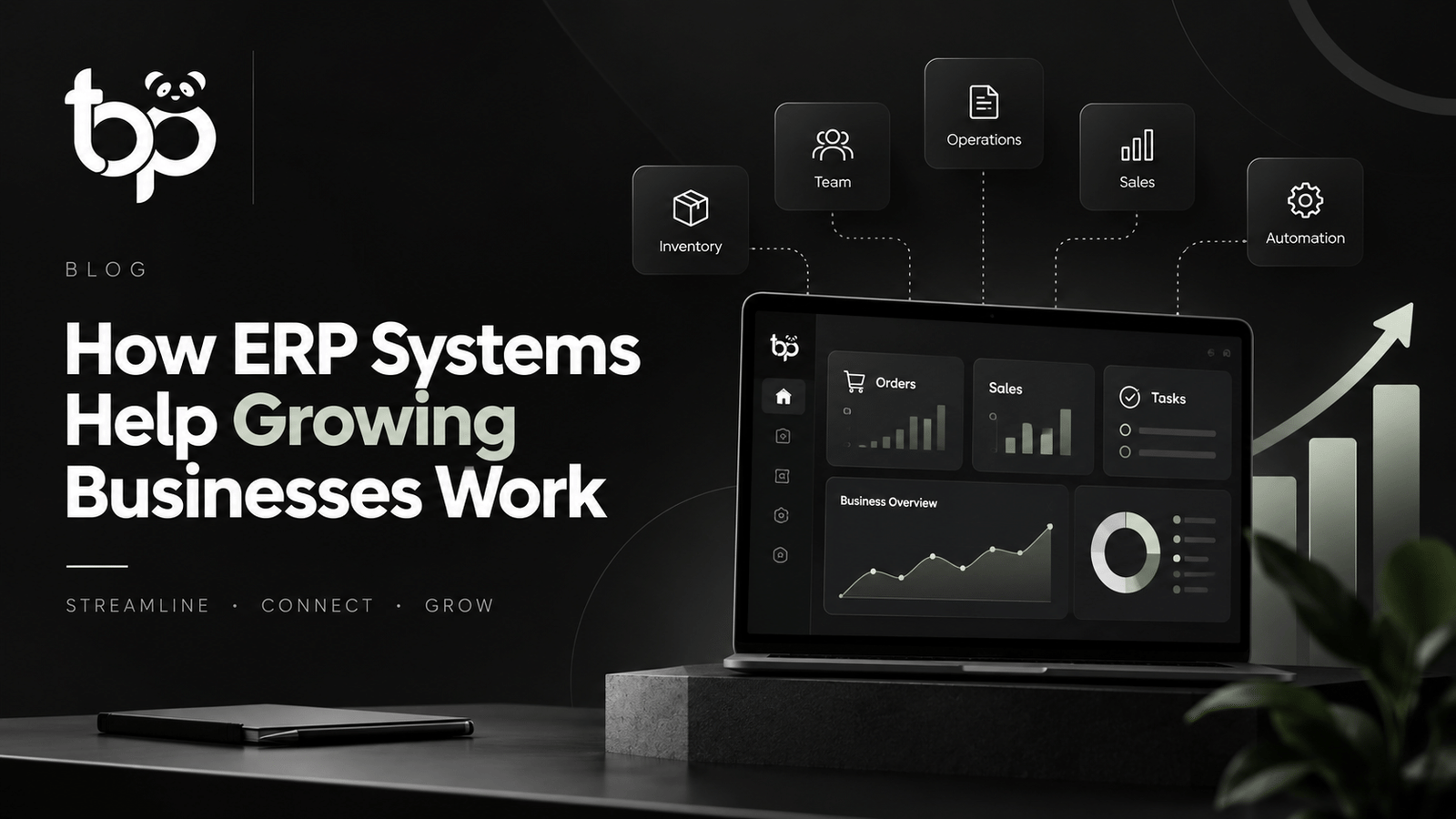
An enterprise resource planning (ERP) system can help address these challenges. ERP software connects core business processes and data within an integrated system, helping organizations manage functions such as finance, procurement, project management, supply chain operations, and more. A central source of data can reduce duplication and make information easier to access across the business.
Why Do Growing Businesses Need ERP?
Growth often exposes weaknesses in existing processes. A spreadsheet may work for a small team but become difficult to maintain as information increases. Manual data entry may be manageable at first, but repetitive work can become a significant operational burden. Separate systems can also create data silos and make it harder for teams to maintain a consistent view of the business. ERP systems are designed to connect these processes. By bringing business information into an integrated environment, ERP can improve visibility, reduce manual work, support collaboration, and provide a stronger foundation for scaling operations.
The Business Value of ERP
The value of ERP is not simply having another software platform. It comes from connecting business processes and making information easier to use.
A well-implemented ERP system can help businesses reduce repetitive manual work through workflow automation, create a more consistent source of business data, improve visibility across finance and operations, connect information between departments, and support more efficient processes as the organization grows.
Modern cloud ERP platforms can also be modular and scalable, allowing businesses to introduce capabilities as their requirements evolve.
ERP Integration Matters
An ERP does not necessarily need to operate in isolation. Many businesses rely on other systems, including CRM, e-commerce, project management, analytics, and specialized operational software. ERP integration connects these systems so information can move between them without unnecessary manual intervention. APIs and other integration methods can help synchronize data, reduce silos, and create more connected workflows.
This is particularly important when a business has already invested in software it relies on. Replacing every existing system is not always the answer. In many cases, connecting the right systems can create a more efficient technology environment.
Building the Right ERP Strategy
Choosing an ERP should begin with the business problem, not simply with a list of software features. Businesses should first understand where work is slowing down, where information is being duplicated, which processes remain manual, and which systems need to communicate with one another. At The Brand Panda, we believe technology should be built around the way a business actually operates. That can mean improving an existing ERP, integrating different systems, or building custom software and automation around an ERP to address specific operational gaps.
The objective is not to add technology for its own sake. It is to create connected systems that help a business operate more efficiently, make better use of its data, and build the capacity required for sustainable growth.